Kasugayama Castle Site sightseeing_11
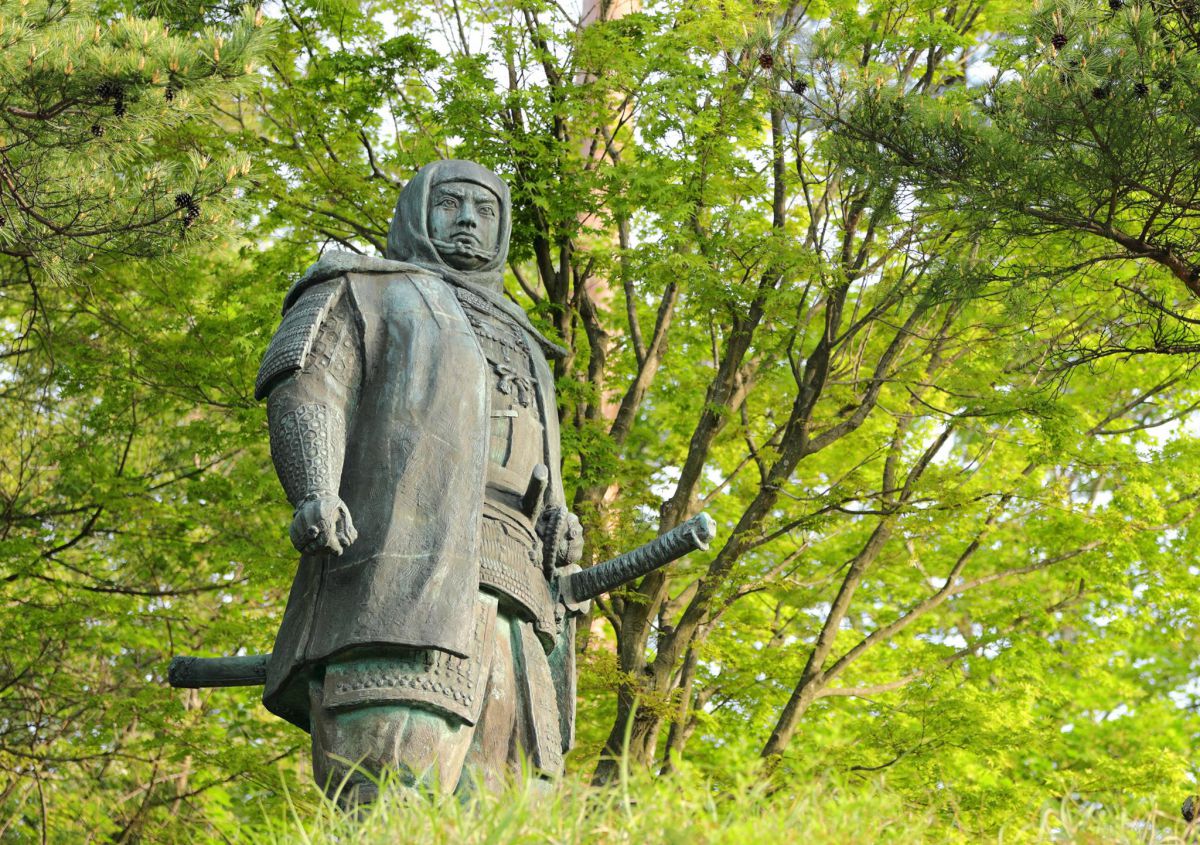
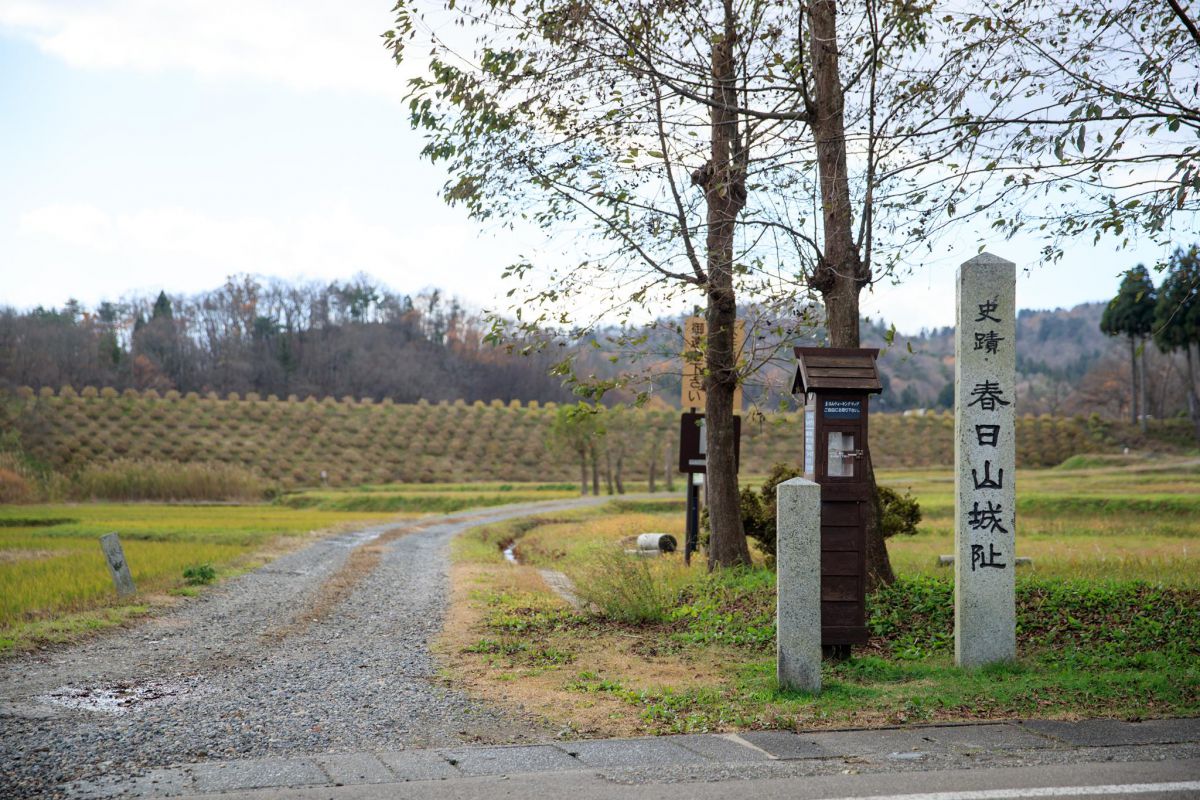
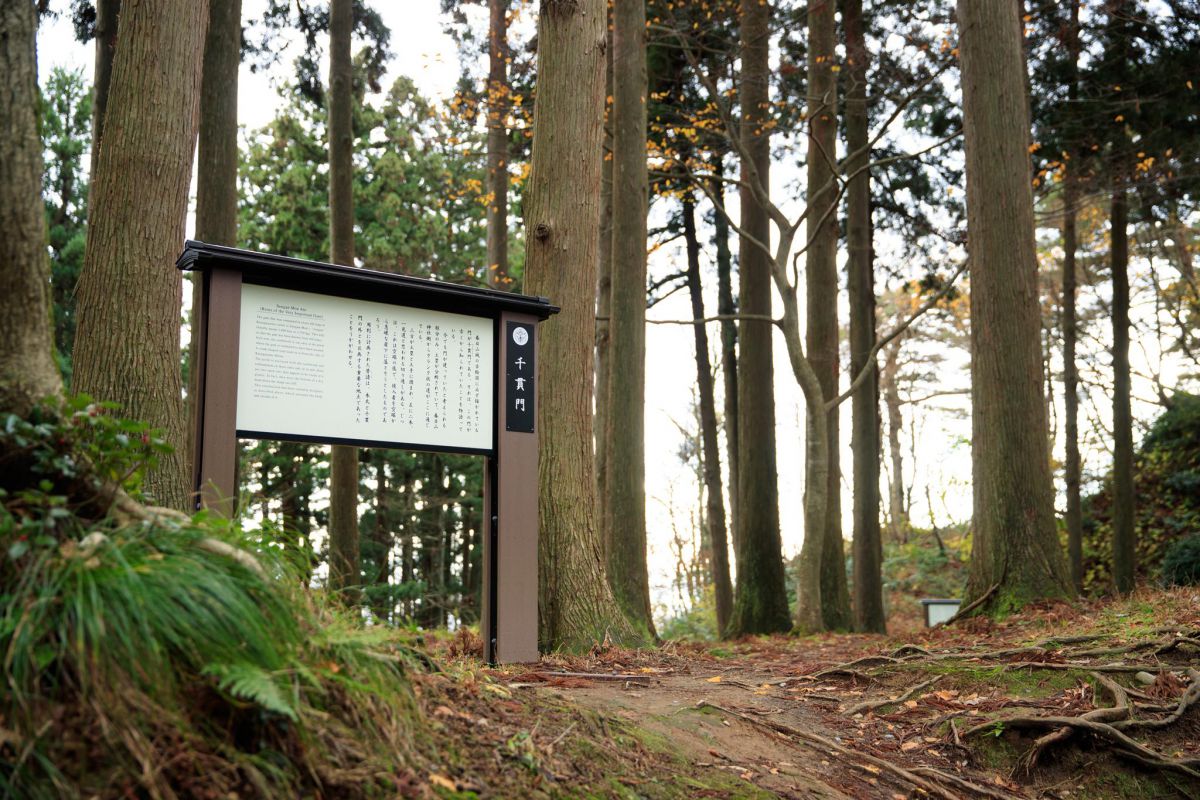
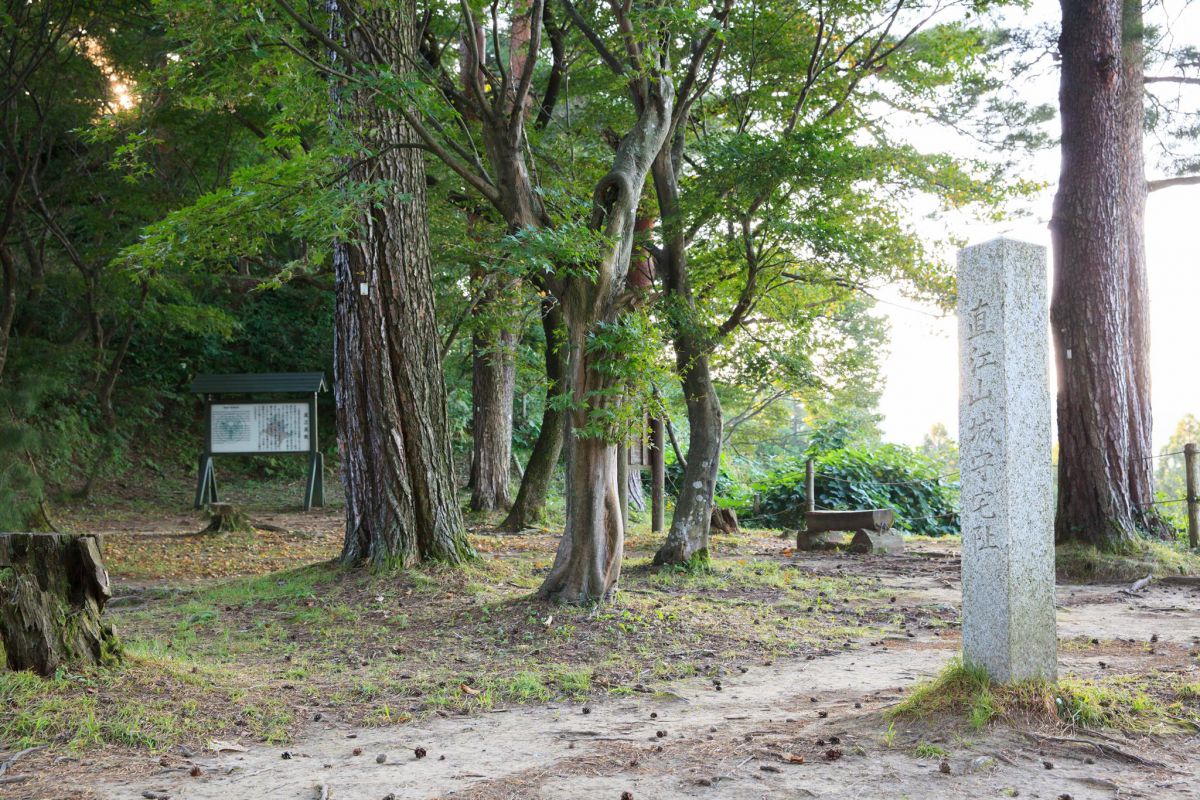
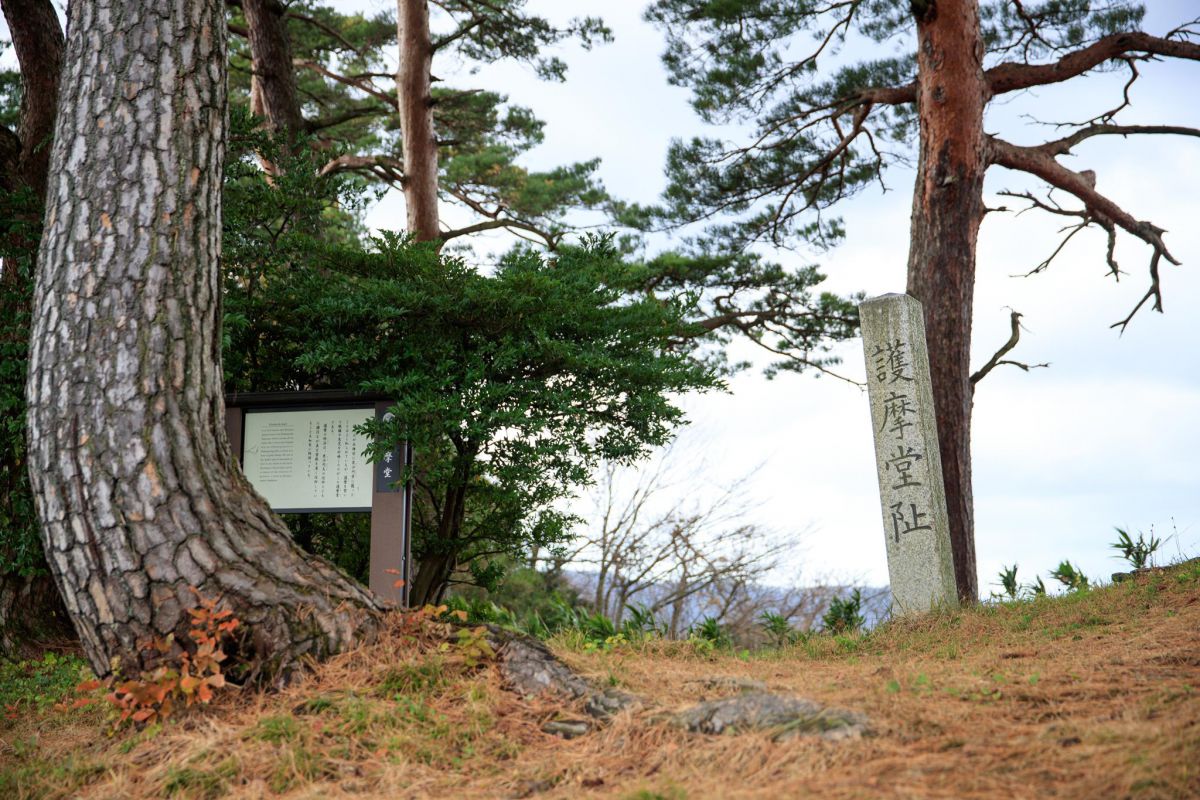
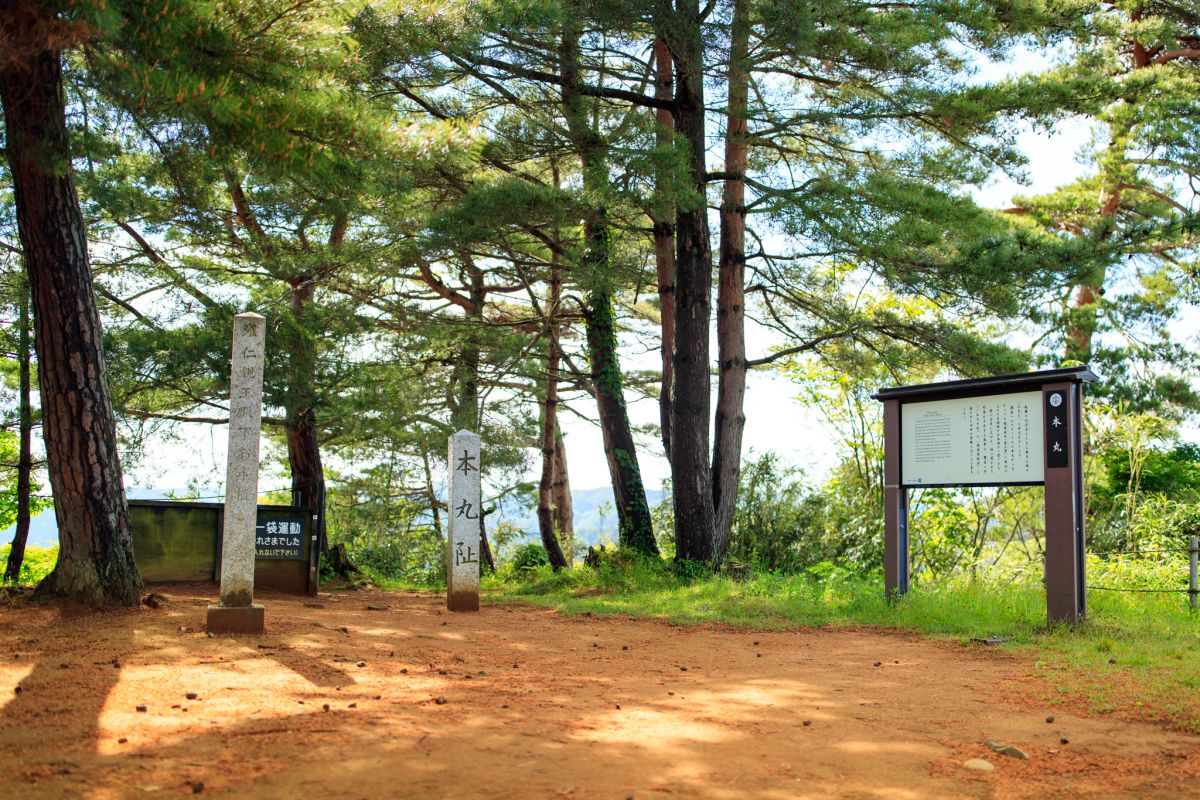
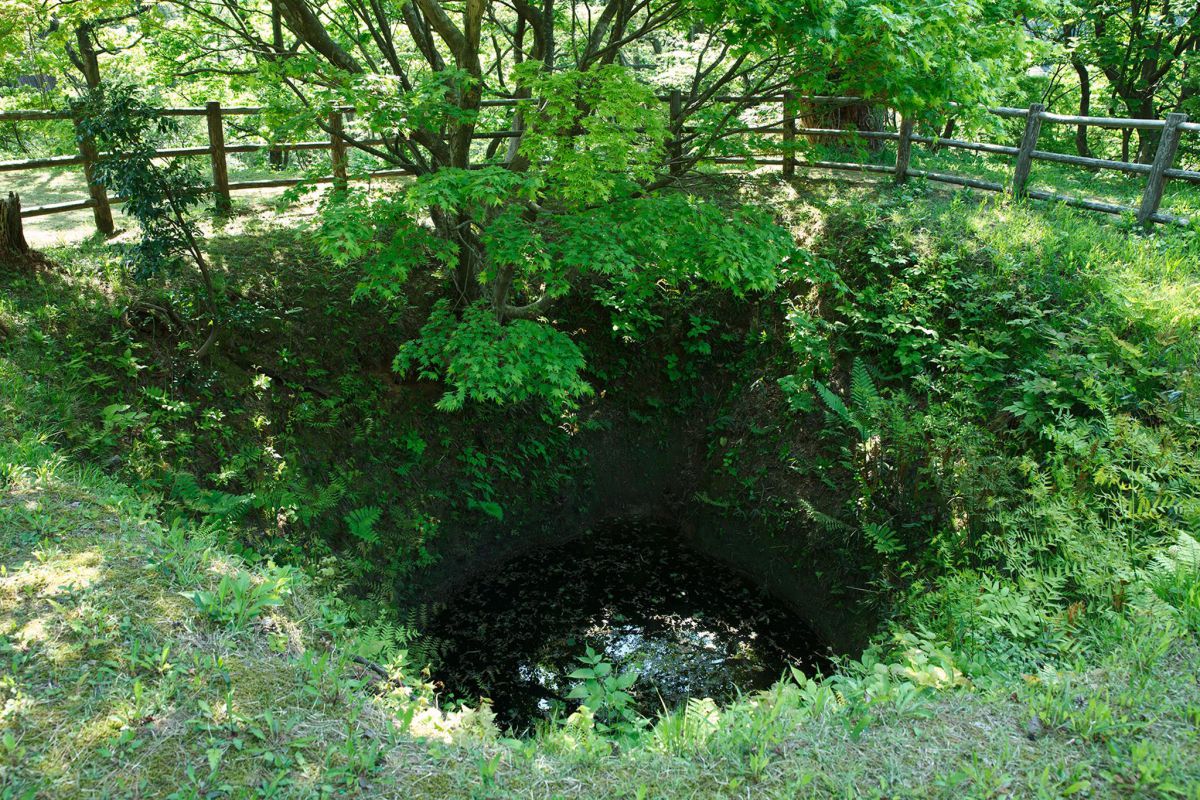
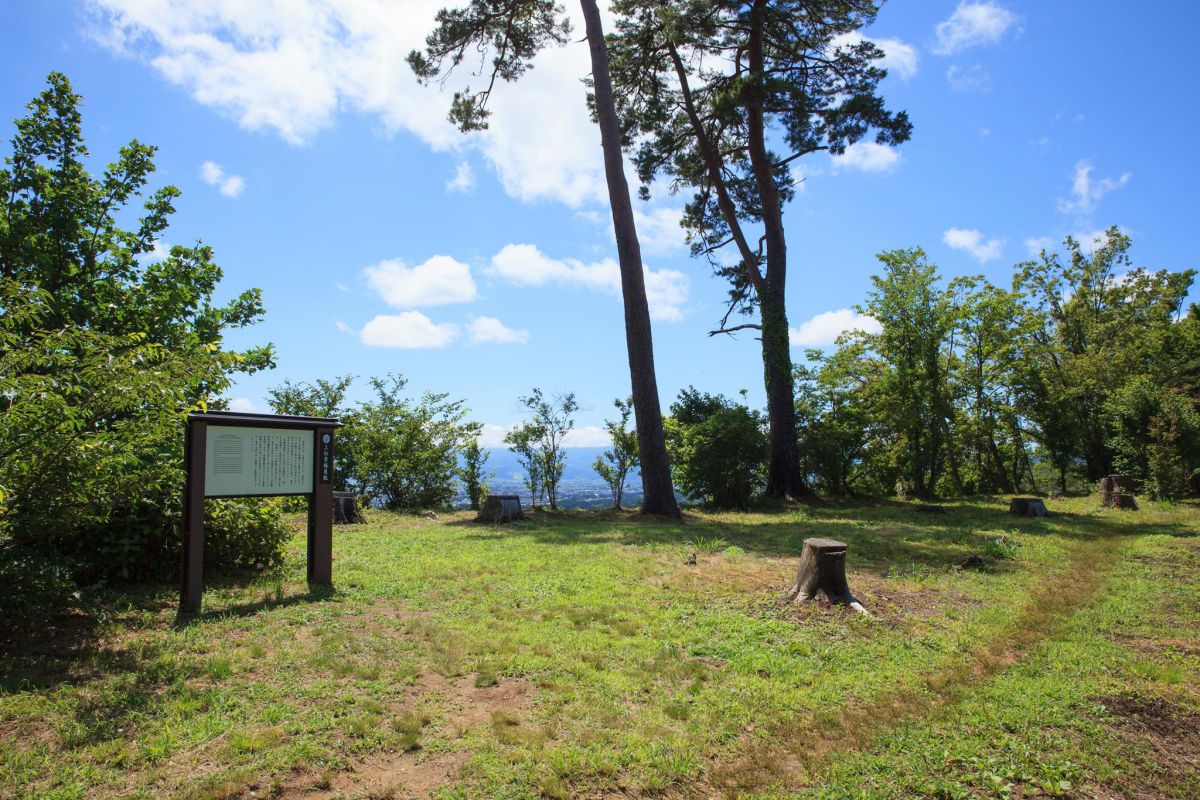
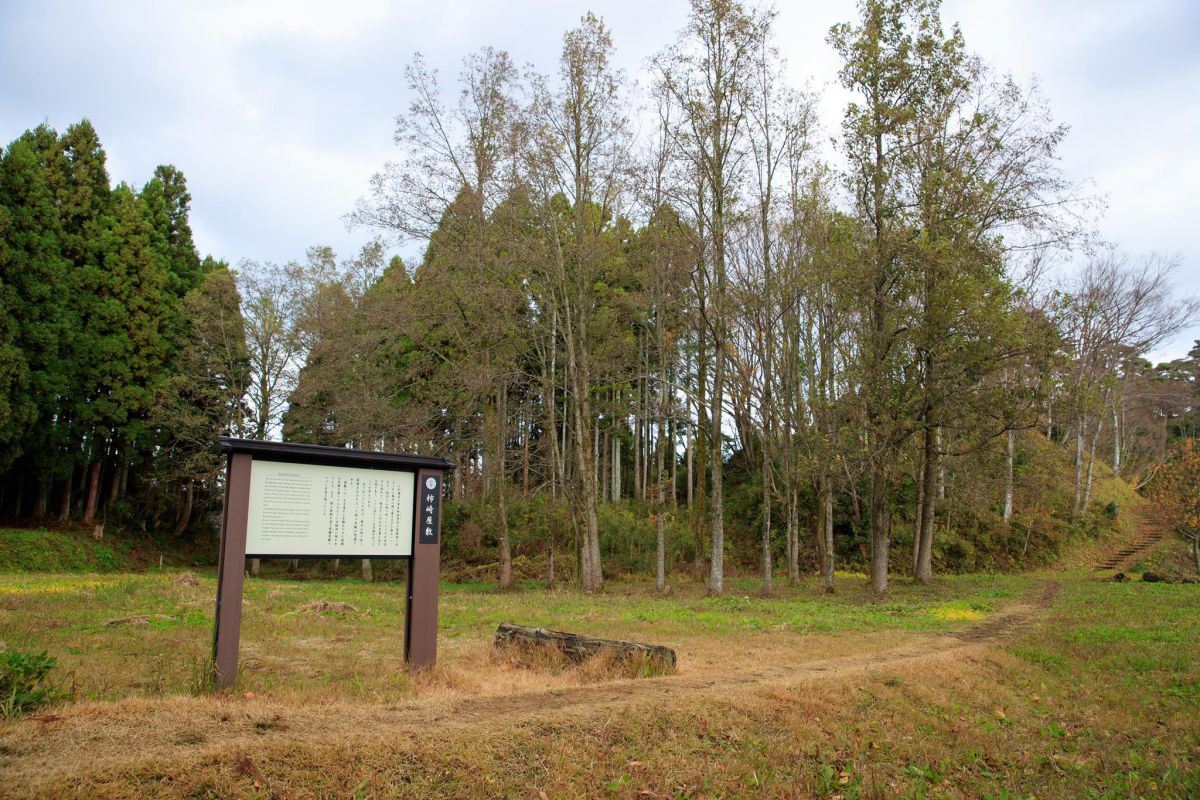
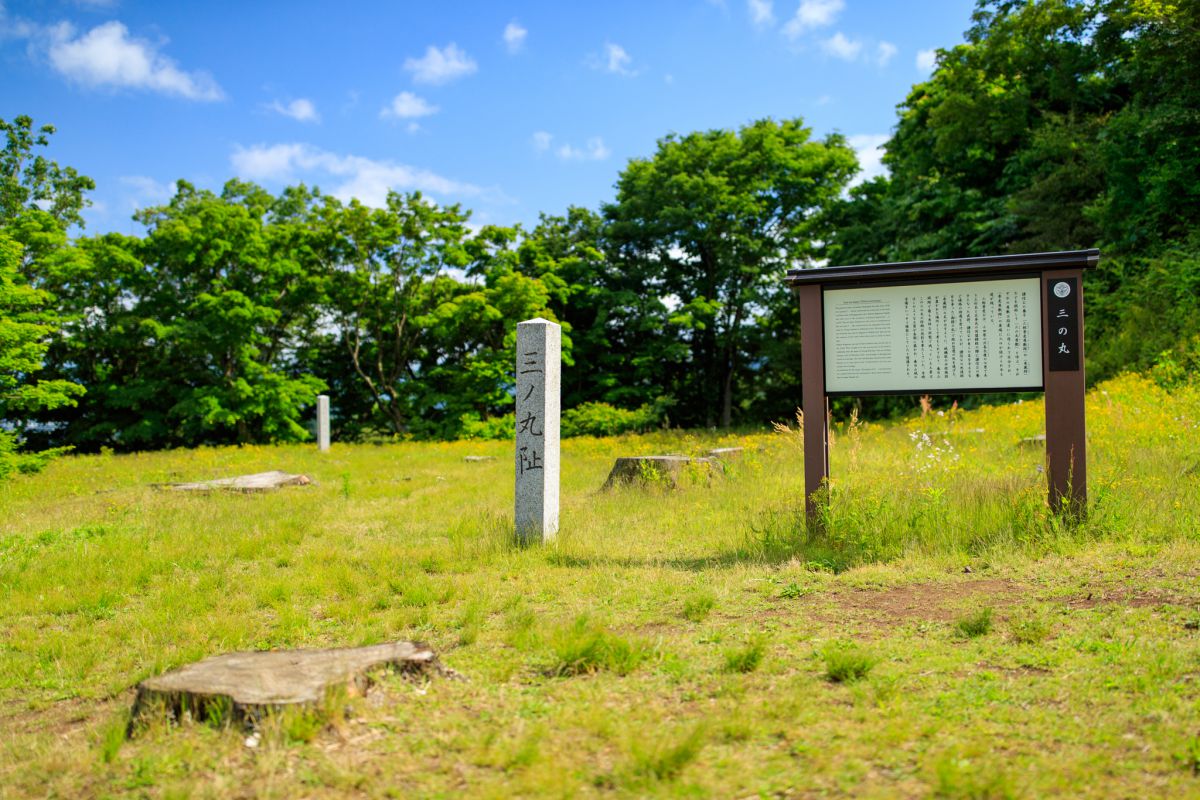
Kasugayama Castle was once an expansive mountain fortress and home to Uesugi Kenshin (1530–1578), one of the most notable warlords of the Sengoku, or “Warring States,” period (1467–1568). The fortified area of the castle at its peak in the latter half of the sixteenth century covered roughly four square kilometers, occupying much of Mt. Kasugayama.
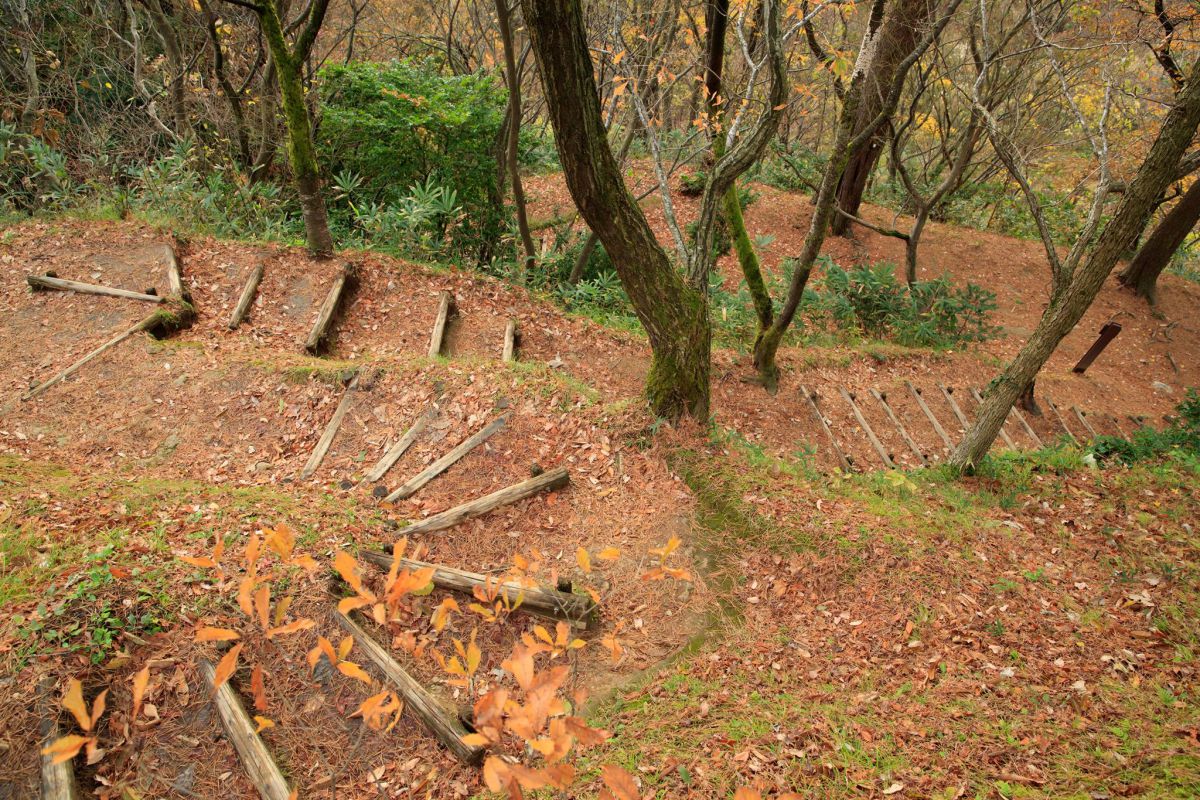
Although the exact start of the castle’s construction is unknown, the earliest mentions of the castle date back to the fifteenth century, and extensive expansion work was undertaken during the time of Kenshin. The fortress relied on the natural features of the mountain, rather than stone walls, and much of the castle’s former earthen ramparts and dry moats can still be seen today. One of its largest remaining features, the outer enclosure (sogamae) at the base of the mountain, stretches 1.2 kilometers between the Joetsu City Archaeological Center and Kasugayama Castle Site Story Museum.
Along the way to the mountaintop, signposts mark some of the castle’s defining features, including the sites of former residences, temples, and defensive structures. The castle’s main enclosure, or central stronghold (honmaru), was situated near the top of the mountain at an elevation of roughly 180 meters. From there, Kenshin could observe the castle complex, the Sea of Japan to the north, and the provincial capital at the base of the mountain. The second and third enclosures served as the final lines of defense and retainers and servants lived in their vicinity. Beyond there, the castle grounds extended toward the outer enclosure, encompassing barracks, watchtowers, and fortifications.
After Kenshin’s death in 1578, his adopted son Uesugi Kagekatsu (1556–1623) took control of Kasugayama Castle. In 1598, Toyotomi Hideyoshi (1537–1598), then the de facto ruler of the country, transferred the Uesugi family to Aizu (in present-day Fukushima Prefecture) to secure control of that area. Kagekatsu ceded control of the castle to the Hori daimyo family, who soon abandoned it.
Also on Mt. Kasugayama, roughly halfway up the mountain, is Kasugayama Shrine, originally built in 1901. Kasugayama Shrine and the outer enclosure area are key locations in the annual Lord Kenshin Festival, which takes place in August. Today, Kasugayama Castle is counted among Japan’s “100 famous castles,” and the remnants of the castle were designated a National Historic Site in 1935.
View from Kasugayama Castle
The highest point of the former Kasugayama Castle is located at an elevation of 180 meters, offering panoramas of the Joetsu area and insight into its history. The mountain fortress was once home to the renowned warlord Uesugi Kenshin (1530–1578) and, beyond the city, much of the current view remains unchanged from his time.
Facing east, a vast expanse of Joetsu is visible, from the Myoko area in the south to the Sea of Japan in the north. Around the middle of the panorama, the Sekikawa River stretches along the Kubiki Plain from right to left, passing some of the city’s key locations, including the Naoetsu Station and Takada Station areas.
The Naoetsu Station area was the administrative center of medieval Echigo Province (present-day Niigata Prefecture) and today is the point of departure for historical sites such as Fuchu Hachimangu Shrine. The Takada Station area provides access to the south, including the site of Takada Castle and its castle town.
Looking beyond the city and past the Kubiki Plain, a mountain range stretches into the distance encompassing Mt. Hatamochi, Mt. Yone, Mt. Ogami, and Mt. Kurohime, while Mt. Hakkai rises farther away. Fortresses were built on many of these peaks in Kenshin’s time.
The diverse vegetation on the forested peak of Mt. Kasugayama includes cherry and gingko trees; and snow falls on the mountain in the winter. Similarly, the view of the city changes throughout the year, adding seasonal variety to each visit.
Kasugayama Castle Outer Enclosure (Sogamae)
The Kasugayama Castle outer enclosure (sogamae), is a 1.2-kilometer stretch of land that formed the outermost fortification of the castle best known as the stronghold of the influential warlord Uesugi Kenshin (1530–1578). Kenshin enlarged the castle grounds during his rule, making use of the natural topography of Mt. Kasugayama instead of building stone embankments and fortifications. Expansion of the castle continued in the decades after Kenshin’s death in 1578, further utilizing dry moats and earthen ramparts. The outer enclosure is thought to have been dug during this time.
The outer enclosure is situated at the base of the Kasugayama Castle site, between the Joetsu City Archaeological Center and the Kasugayama Castle Site Story Museum. Walking between the two buildings offers a chance to experience the scale of the former castle grounds. It is also possible to view the site of the former main castle enclosure from between the two museums. During the annual Lord Kenshin Festival, the open ground of the outer enclosure serves as the location of a reenactment of the famous Battles of Kawanakajima, fought between Uesugi Kenshin and his longtime rival, Takeda Shingen (1521–1573). Water iris flowers planted in the moat bloom in early summer.

This English-language text was created by the Japan Tourism Agency.